
Fast answer
What does AB 2511 mean for skilled nursing power-readiness evidence?
AB 2511 added a 96-hour alternate-power requirement for California skilled nursing facilities, but timing and implementation details have shifted and should be checked against current state guidance. The practical point remains: power-readiness evidence is now too important to rebuild after the fact.
The number people remember is 96 hours. The work around it is messier: facility scope, outage exposure, fuel assumptions, vendor assumptions, and a timeline that still makes sense later.
Why the 96-hour requirement changes the conversation
Once backup power becomes a formal expectation, leadership asks different questions. Which buildings were exposed? Which assumptions were checked? What changed during the event?
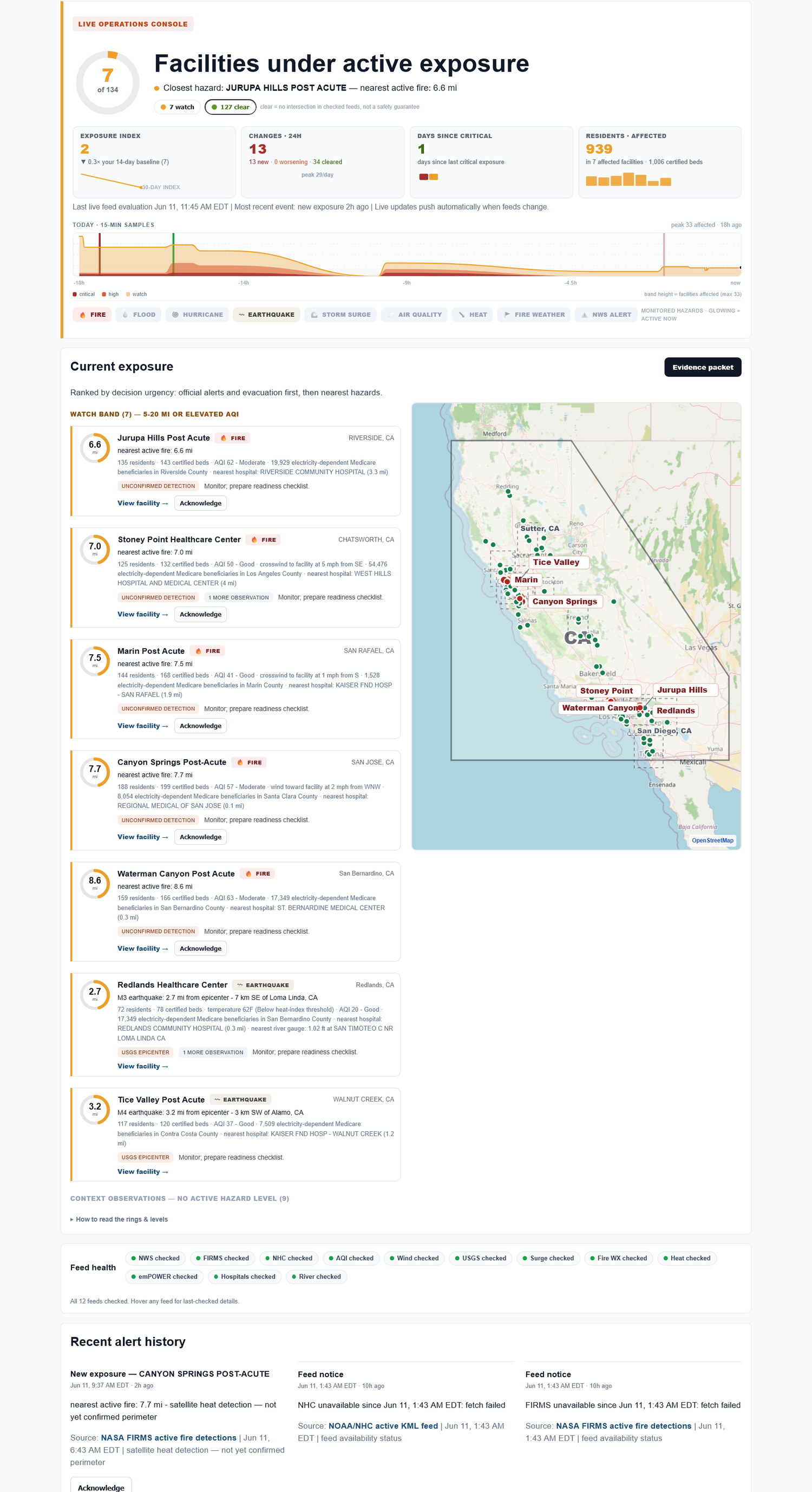
Exposure Watch does not answer generator questions for you. It preserves the external power-risk timeline that belongs beside those internal records.
AB 2511 backup-power evidence worksheet
Use this short worksheet to capture what the team needs before the formal review, not as a substitute for the official program.
| Element | How to use it |
|---|---|
| 96-hour readiness context | Keep external power-risk exposure beside internal generator and vendor records. |
| Facility scope | Confirm which SNFs are in the review. |
| Guidance check | Verify current state guidance before presenting a deadline summary. |
Download worksheet This static worksheet is a practical review aid, not a certification or official filing tool.
How Exposure Watch helps
Exposure Watch saves power-related exposure rows by facility, including source, status, timing, and change history. That gives your team review material without claiming to satisfy AB 2511 or any state approval process.
The evidence trail to keep on every page
| Facility | Hazard | Source | Status / distance | First seen | Last checked | Export |
|---|---|---|---|---|---|---|
| Facility A | Wildfire smoke | Authoritative, source-cited alert | Nearby / active | timestamp | timestamp | Export |
| Facility B | Power shutoff | Authoritative, source-cited notice | Possible impact | timestamp | timestamp | Export |
| Facility C | Flood | Authoritative, source-cited alert | Watch area | timestamp | timestamp | Export |
Built automatically from the same live checks - no extra binder work.
What Exposure Watch does not do
Exposure Watch does not replace your emergency-preparedness program, make compliance guarantees, file regulatory reports, run incident command, or tell staff what to do in the moment. It helps your team keep the facility-level external-hazard picture and evidence trail current.
FAQ
Is the AB 2511 96-hour deadline still January 2024?
Do not rely on a stale deadline summary. The statutory and budget context has shifted, so operators should verify current state guidance. Exposure Watch frames the issue as an ongoing power-readiness evidence need.
Does Exposure Watch verify generator capacity or fuel contracts?
No. It preserves external exposure history. Generator capacity, fuel, vendors, testing, and state filings remain facility and operator responsibilities.
Does Exposure Watch collect PHI?
No. Exposure Watch is facility-level external-hazard monitoring. Do not enter resident names, patient records, medical details, or clinical data.
Does Exposure Watch tell staff what to do during an incident?
No. It surfaces facility exposure and preserves the record. Your team keeps responsibility for operations, clinical judgment, reporting, and emergency-preparedness decisions.